
Over the past ten years, evaluating dozens of watermelon and melon cultivars each season has allowed me to explore many unique types that differ from those typically found in mainstream markets. Some of these melons stand out with their distinctive rind patterns, varied colors, exceptional flavors, or other special characteristics. I’ve shared my observations through…Read more about Exploring Unique Melon Cultivars for Direct-to-Consumer Market[Read More]
Cucurbits

Multiple foliar pathogens (some of which are also major problems for fruits) are appearing in watermelon and cantaloupe crops. It is time to continue or begin fungicide applications to prevent diseases such as gummy stem blight (Figure 1), anthracnose (Figure 2), and Phytophthora blight. During recent field visits, I have observed gummy stem blight and…Read more about Disease Watch: Gummy Stem Blight, Anthracnose, and Phytophthora in Cucurbits[Read More]
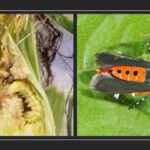
Pheromone trap monitoring of corn earworm (Helicoverpa zea) and squash vine borer (Melittia cucurbitae) is underway throughout the state. Utilizing trap catches in your area can help inform management decisions and avoid unnecessary pesticide applications. Squash Vine Borer (https://extension.entm.purdue.edu/veg/squash-vine-borer/) For those trappers who are currently reporting, we are catching moths regularly in Allen, Marion, and…Read more about Insect Trapping Updates[Read More]
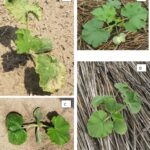
Across the state of Indiana and the country, the first pumpkin and winter squash plants of the season are popping up out of the ground. It is a time of great anticipation and usually triggers a series of phone calls and emails to my inbox. Below, I address some of the frequently asked questions about…Read more about Pumpkin Weed Management FAQs[Read More]
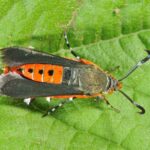
I monitor three different insect pests with pheromone traps to help make informed decisions about when to spray insecticides or take other actions for management. Trap data can be found on the Extension Entomology Vegetables Website. The longest running is the corn earworm (Figure 1) trapping network. Participation in this network entails installing a cone-shaped…Read more about Annual Call for Insect Trappers[Read More]
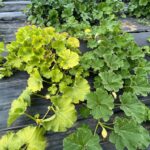
Introduction Cucurbit yellow vine disease (CYVD) is an emergent disease in the United States caused by the bacterium Serratia ureilytica, and it commonly affects zucchini, squash, watermelon, and melons. The pathogen that causes CYVD is transmitted by the squash bug (Anasa tristis, Figure 1), and other potential vectors include the striped cucumber beetle (Acalymma vittatum)…Read more about Pathogen Spotlight: Serratia ureilytica Causing Cucurbit Yellow Vine Disease[Read More]


An average-yielding watermelon crop in an acre accumulates approximately 150 pounds of both nitrogen and potassium in the vegetative tissue and fruit. These nutrients are supplied by the soil’s existing nutrient pool and through supplemental fertilizer applications. Soil testing is a valuable tool for assessing what nutrients are present in soils and the amount of…Read more about Lessons Learned: Nitrogen Fertilizer Management in Indiana Watermelon Production[Read More]

Planning your vegetable varieties for the upcoming season? Purdue University has maintained comprehensive records of vegetable variety trials throughout the Midwest since 1999. The Midwest Vegetable Trial Report series offers valuable applied research findings specifically relevant to vegetable and melon production in the Midwest region. Below, you’ll find abstracts from the most recent reports. For…Read more about Data-Driven Decisions: Choosing Vegetable Varieties with Midwest Trial Results[Read More]
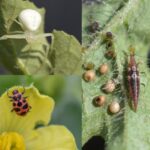
Growing watermelons in Indiana isn’t always easy if you have cucumber beetles and spider mites. These pests are some of the most damaging to Midwest cucurbits and are commonly managed with a combination of insecticides and miticides. Unfortunately, chemical management for one pest could interfere with control of another pest. For example, spider mite outbreaks…Read more about Want Fewer Spider Mites? Ease Up on the Beetle Spraying![Read More]