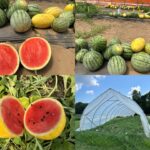
Over the past ten years, evaluating dozens of watermelon and melon cultivars each season has allowed me to explore many unique types that differ from those typically found in mainstream markets. Some of these melons stand out with their distinctive rind patterns, varied colors, exceptional flavors, or other special characteristics. I’ve shared my observations through…Read more about Exploring Unique Melon Cultivars for Direct-to-Consumer Market[Read More]
Varieties
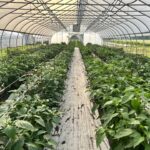
Are you still thinking about varieties for the upcoming season? Purdue has been keeping a record of vegetable variety trials in the Midwest since 1999. The Midwest Vegetable Trial Report series includes reports of applied research relevant to vegetable and melon production in the Midwest. Here are some abstracts of the most recent reports. Visit the Midwest Vegetable…Read more about Selecting Vegetable Varieties for Your Farm[Read More]

The Midwest Vegetable Trial Report series includes reports of applied research relevant to vegetable and melon production in the midwestern U.S. The purpose of the series is to publish results and document the annual results of vegetable and melon research projects. In 2022, 16 trial reports from Indiana, Illinois, Michigan, and Minnesota were published. Variety…Read more about Midwest Vegetable Trial Reports. A Great Resource for Growers.[Read More]
Are you still thinking about varieties for the upcoming season? Purdue has been keeping a record of vegetable variety trials in the Midwest since 1999. The Midwest Vegetable Trial Report series includes reports of applied research relevant to vegetable and melon production in the Midwest. Here are some abstracts of the most recent reports. Visit…Read more about Selecting Vegetable Varieties for your Farm[Read More]
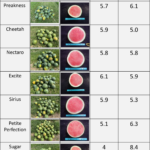
We conduct standard seedless watermelon variety trials at Southwest Purdue Agricultural Center each year. In a separate trial, we evaluate mini seedless watermelon varieties. Mini watermelons refer to fruit ranging from 4.4 to 8.8 lbs, although the industry considers 6-7 lbs fruits ideal. Fruit in a wide range of sizes is suitable to sell at…Read more about Mini Seedless Watermelon Varieties[Read More]
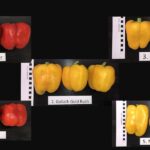
There is still time to select sweet pepper varieties for this summer. During the 2020 growing season, I evaluated a new batch of five sweet bell pepper varieties. I also evaluated five sweet tapered pepper varieties for a second season. All varieties (Table 1, Figures 1 & 2) were grown in a high tunnel at…Read more about Have You Selected Your Sweet Pepper Varieties Yet?[Read More]
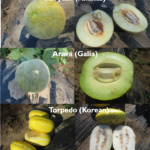
Melon is a crop with diverse fruit characteristics. They have different color, shape, rind pattern, texture, and flavor. In major food stores, cantaloupe and honeydew melons may be the only melon types sold, while the fantastic experience of melon consumption is far more than that. This created an opportunity for selling unique melon fruit at local farmers’ market and with a potentially higher price. It…Read more about Specialty Melon Evaluation in Southern Indiana[Read More]
Carl Cantaluppi is a retired Area Horticulture Agent, North Carolina Cooperative Extension Service. For over 30 years, asparagus growers have known about male hybrid varieties that have overtaken the yields of the open-pollinated varieties like Mary Washington. These male hybrids have out-yielded the open-pollinated varieties by 3 to 1. Growers can then start to recoup…Read more about New Asparagus Varieties and Sources[Read More]
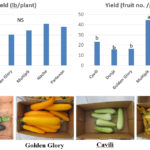
Warm-season vegetables like tomato, cucumber, pepper etc. often receive premium prices if they were sold at farmers’ markets earlier in the season. The same happens on summer squash, with the different fruit shape and color, summer squash provides a great diversity to the market. High tunnels that are planted with warm-season vegetables are often closed…Read more about Summer Squash Cultivar Selection for High Tunnel Production[Read More]
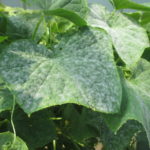
Powdery mildew is particularly severe in high tunnel and greenhouse growing conditions (Figure 1). It affects a wide range of crops including tomatoes and cucumbers. In addition to using synthetic fungicides to control this disease in high tunnels, we found powdery mildew on cucumbers can also be effectively controlled through variety selection and intensive plant…Read more about Variety Selection is Important for Managing Cucumber Powdery Mildew in High Tunnels[Read More]