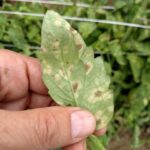
In 2015 and 2018, I observed Cercospora leaf mold of tomato in high tunnel operations. In Hotline articles in those years, I noted that Cercospora leaf mold is normally a subtropical disease. This disease has again been observed in 2021 on tomatoes in high tunnels. I’m still not certain of the importance of this disease…Read more about Tomato Leaf Mold Diseases[Read More]
Found 1716 Articles
Organic producers and handlers can now apply for U.S. Department of Agriculture (USDA) funds to assist with the cost of receiving or maintaining organic certification. Applications for the Organic Certification Cost Share Program (OCCSP) are due Nov. 1, 2021.
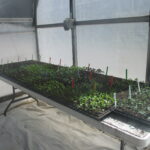
As warm-season crops are harvested, many vegetable farmers start the process of transitioning to cool-season crops. Leafy greens and root vegetables are ready to be planted. High temperature is present across the state recently. The heat stress may affect germination and growth of some of the vegetables. Spinach is probably one of the most heat-sensitive…Read more about Heat Effects on Cool-season Vegetables[Read More]
Dr. Margaret McGrath’s lab from Cornell University has developed a great resource for growers interested in using biopesticides to manage vegetable diseases. https://www.vegetables.cornell.edu/ipm/diseases/biopesticides/ This article provides a general introduction of biopesticides, major types of biopesticides, and the pros and cons of using them. The website also lists representative biopesticide products that are available for managing…Read more about Resources for Biopesticides for Vegetable Disease Management[Read More]
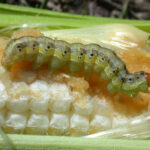
After weeks of successive trap catches being empty or in the single digits, we have seen a dramatic increase in the last couple of days in the number of corn earworm moths captured in our pheromone traps throughout the state. At multiple locations catches jumped from near nothing to hundreds of individuals in a single…Read more about Corn Earworms are Taking Flight[Read More]
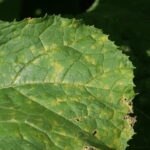
Downy mildew of cucumbers has been observed in Knox County. This disease has not been observed on pumpkins, but it is possible for downy mildew to spread from cucumbers to pumpkins. Therefore, pumpkin growers should scout for downy mildew and manage for the disease depending on their situation. Pumpkin growers who plan to harvest mid…Read more about Downy mildew of Pumpkin: What to Look for[Read More]
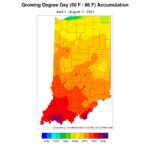
Well, it was a nice 4 weeks with no drought or abnormally dry designated areas across the state. Unfortunately, the lack of rain over the past few weeks have led to browning lawns, cracked soils, and other tell-tale signs that drought may be returning. The US Drought Monitor has designated three areas in Indiana as…Read more about Dry Conditions Have Returned to Indiana[Read More]
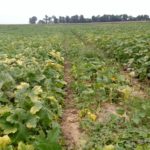
In the last several days I have received complaints of pumpkin plants with yellow leaves. Growers want to know if the yellow is a symptom of disease and what can be done about it. Yellow lesions on leaves may be symptoms of disease. There can be many reasons why pumpkin plants have yellow leaves. Usually,…Read more about Yellow Leaves on Pumpkin[Read More]

Please join us for the 2021 Hydroponics Workshop, hosted by Krishna Nemali! September 22, 2021 (8:30 am to 3:00 pm) (A daylong interactive learning session and hands-on activities related to greenhouse and indoor hydroponics) Register online at https://purdue.ca1.qualtrics.com/jfe/form/SV_cCJPpWrODzqmO7Y Deadline to register: September 19, 2021 (Registration is required to attend the workshop. Registration fee ($25) includes…Read more about Hydroponics Workshop[Read More]
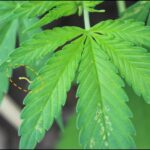
This is our second year scouting CBD hemp to learn more about the insect communities occurring on these plants throughout the season and ‘who’ the potential pest insects might be! This year we had the opportunity to scout CBD hemp plants grown both in the field and in a high tunnel environment (Figure 1). Since…Read more about Insects Visiting CBD Hemp so Far During Summer 2021[Read More]
Purdue University prohibits discrimination against any member of the University community on the basis of race, religion, color, sex, age, national origin or ancestry, genetic information, marital status, parental status, sexual orientation, gender identity and expression, disability, or status as a veteran. This material may be available in alternative formats. 1-888-EXT-INFO Disclaimer: Reference to products in this publication is not intended to be an endorsement to the exclusion of others which may have similar uses. Any person using products listed in this publication assumes full responsibility for their use in accordance with current directions of the manufacturer.