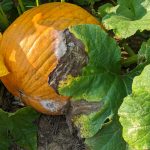
Phytophthora blight was a serious disease this past season. As a result, I have had many questions about managing this disease. The following article is an update of a previous article on this subject. The questions I have been asked have ranged from what do I spray to how does this disease work? Therefore, I…Read more about Phytophthora Blight of Cucurbits[Read More]
Found 1716 Articles
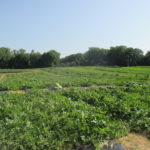
Thanks to growers’ collaboration and help from Superior Ag, we collected plant tissue samples from 12 watermelon fields at different crop growing stages in Southern Indiana in the 2020 season. In this article, I want to discuss two of the issues that standout from these tests. One is the generally low or deficient Magnesium (Mg)…Read more about Survey of Watermelon Nutritional Status in Southern Indiana — Magnesium and Potassium[Read More]

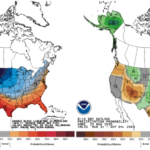
After the last several weeks of predominantly dry conditions, the national climate outlooks are finally showing confidence that temperatures should start shifting to cooler than normal and precipitation will be wetter than normal (Figure 1). Hurricane Laura will definitely help the precipitation side of that prediction with current tracks having the strongest rainfall amounts in…Read more about Cooler, Wetter Conditions Expected Over Next Several Weeks[Read More]
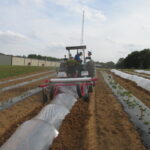
Strawberries are primarily grown in matted row system in Indiana, in which bare-root strawberry plants are set in the spring. Runners are established. Fruit is first harvested in the second year and plantings are renovated each year for 2-3 seasons. Growers in the southern part of the state expressed interest in growing strawberries in plasticulture…Read more about Using Low Tunnel is Promising to Increase Yield of Annual Plasticulture Strawberry Production[Read More]
This is an update of the article When to Stop Spraying Fungicide published in issue 666 on Sep. 12, 2019. Many vegetable growers are closing in on the final harvest. Several growers have asked me about fungicide applications late in the season. In this article, I want to address when to stop. To limit the…Read more about When to Stop Spraying[Read More]
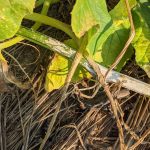
This disease appears to be more important each year. It is not clear to me why. This article reviews Plectosporium of pumpkin, sometimes called white speck. I would rank Plectosporium blight behind powdery mildew, bacterial leaf spot and Phytophthora blight in economic damage caused. The occurrence of this disease is usually sporadic. However, when it…Read more about Plectosporium blight of Pumpkin[Read More]
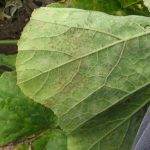
Downy mildew was observed on pumpkins in Daviess, Knox and Washington County. Evenings and mornings with heavy dews and fogs may help the disease to spread. Whether to apply fungicides for this disease will depend in part on when growers plan to harvest. In addition to the cucurbit downy mildew outbreaks reported in the last…Read more about Second Downy Mildew Report in Indiana[Read More]
Many things changed this year. It is unfortunate we are not able to meet in person, but there are no shortage of great opportunities for learning. And even more, as the distance may not be an issue when field days become virtual. I hope you have enjoyed the Purdue Small Farm Education Field Day and…Read more about Upcoming Virtual Field Days[Read More]
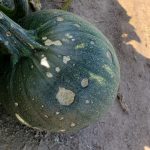
Question: What happened to these fruit? Answer: Hail damage. A storm that happened in middle July brought hail to parts of Indiana. Hail hit small fruit, and damage became pronounced as fruit grow. More information about the damage to vegetable crops can be found in the article Hail Damage published in Vegetable Crops Hotline Issue…Read more about Answer to Question from Last Issue (8-13-2020)[Read More]
Purdue University prohibits discrimination against any member of the University community on the basis of race, religion, color, sex, age, national origin or ancestry, genetic information, marital status, parental status, sexual orientation, gender identity and expression, disability, or status as a veteran. This material may be available in alternative formats. 1-888-EXT-INFO Disclaimer: Reference to products in this publication is not intended to be an endorsement to the exclusion of others which may have similar uses. Any person using products listed in this publication assumes full responsibility for their use in accordance with current directions of the manufacturer.