Our team is launching a new webinar series, “Vegetable Chat,” focused on vegetable crop production. The series is designed primarily for commercial vegetable growers, though producers of all scales may find the information valuable. Each session will feature an expert presentation followed by a Q&A discussion. The first session will feature Dr. Thomas Björkman, who…Read more about Vegetable Chat: Broccoli[Read More]
Cole Crops
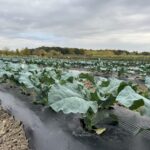
Dear Valued VCH Readers, Welcome to This Week’s Vegetable Crops Hotline – Our Final Issue for 2025 As we close out the 2025 growing season, this marks our final newsletter issue of the year. We’ll return with our next regular issue on February 20, 2026. Should any urgent matters arise during our winter break, we’ll…Read more about From the Editor’s Desk[Read More]
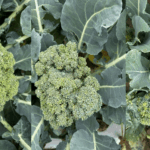
In Spring 2025, we evaluated eight broccoli cultivars at the Southwest Purdue Agricultural Center. The cultivars included: Asteroid, Castle Dome, Emerald Crown, Eastern Crown, Millennium, Imperial, Green Magic, and Eastern Magic. Seeds were sown in the greenhouse on March 10 and transplanted into the field on April 1. The soils at the site were sandy…Read more about 2025 Spring Broccoli Evaluation at the Southwest Purdue Agricultural Center[Read More]
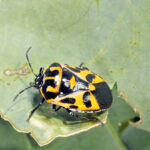
If you haven’t had the pleasure, please allow me to introduce you to the Harlequin bug, Murgantia histronica (Figure 1). This true bug (Order Hemiptera) is equipped with piercing-sucking mouthparts and has a preference for feeding on brassica crops. Unfortunately for us, their feeding results in white blotches on the leaf tissues (Figure 2), and…Read more about Insect Spotlight: Meet the Harlequin Bug![Read More]
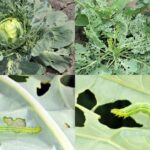
Trichoplusia ni, commonly known as the cabbage looper, is a moth in the family Noctuidae. Native to North America, it is a polyphagous pest (feeds on lots of different plants) that can cause significant damage in a variety of crops and potentially lead to plant death. While cabbage looper has a large geographical distribution, it…Read more about Insect Spotlight: Cabbage Looper[Read More]
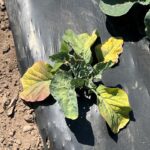
Pathogen and symptoms Wirestem is a disease of cole crops (e.g., broccoli, cauliflower, and cabbage) caused by the soilborne fungus Rhizoctonia solani. This summer, cole growers from the state’s northern region reported that their crops were affected by poorly developed root systems. Upon examination, the plants showed brown stems (figure 1) and narrow roots with…Read more about Management of Wirestem of Cole Crops[Read More]
The Clearspring Produce Auction is located just 2 miles south of US 20 in Clearspring Township in the Heart of the LaGrange-Elkhart Amish Settlement. It is within easy driving distance of the towns of Shipshewana, Topeka, Emma, and LaGrange. Produce is sold 3 days a week throughout most of the growing season (Tuesday, Thursday, Friday),…Read more about Clearspring Produce Auction Update[Read More]
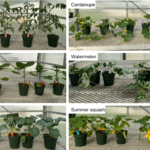
This week, several regions of Indiana experienced excessive rainfall due to the remnants of Hurricane Beryl passing through the state. The heavy rain caused flooding in some vegetable fields. When soil water levels surpass optimal requirements, oxygen is depleted, leading to waterlogging stress for the plants. Figure 1 displays the varied responses of different crops…Read more about Vegetable Responses to Waterlogging Stress[Read More]
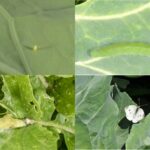
Cabbage white butterflies are medium-sized white butterflies in the family Pieridae. They have black spots on their wings, and a black band on the top of their forewings (top wings), distinguishing them from other species. The butterflies themselves don’t do any damage, however their caterpillars do significant damage to plants in the Brassica family, including…Read more about Insect Spotlight: Cabbage White Butterfly (Pieris rapae)[Read More]
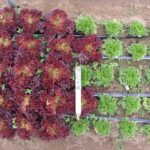
When we surveyed Indiana high tunnel producers eight years ago, about two-thirds of the operations grew cool season crops for harvest from November to March. Although spring field planting season is just underway, it is not too early to plan for markets and organize a production schedule for fall. This article summarizes common crops and…Read more about Planning for Fall and Winter Production in High Tunnels[Read More]