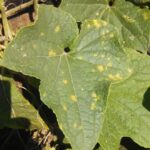
Downy mildew has been observed on cucumber in Berrien County in extreme southwestern Michigan and in Monroe County in extreme southeast Michigan. The downy mildew spores that cause disease on cucumber will cause disease on cantaloupe and may cause disease on other cucurbits such as pumpkin and watermelon. The forecast is for the spread of…Read more about Downy Mildew in Southern Michigan[Read More]
Cucurbits
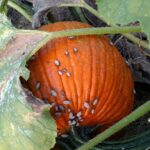
Squash bugs are a pest of cucurbit crops and can sometimes go unnoticed until late in the season when the local populations have built up and you see them in high numbers (Figure 1) attacking the fruits of your crop. Squash bugs are similar in appearance to stink bugs but smell much more pleasant (in…Read more about Now is the Time to Treat Squash Bugs[Read More]
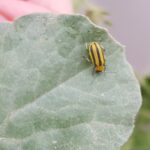
While in your fields in the last week you may have noticed fewer striped cucumber beetles on the leaves and stems of the growing cucurbit plants (Figure 1). This is because there are two generations of this pest in Indiana; the 1st generation adults that overwintered in the field have mated and left behind their…Read more about Cucumber Beetle Updates and Spray Considerations[Read More]
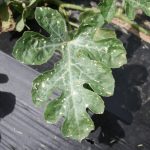
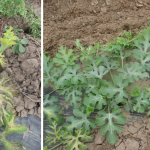
Watermelon is best grown at temperatures around 80-90°F. Temperatures above 90°F reduce the growth rate; above 105°F may cause plant injury. Temperatures below 42°F result in watermelon chilling injury; below 32°F will kill watermelon plants. Extended cool days that lead to soil temperatures dropping into lower 50°F can also kill watermelon seedlings. Using low tunnels is…Read more about Be Cautious When Using Low Tunnels for Early Watermelon Planting[Read More]
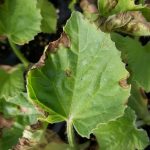
In the last issue of the Vegetable Crops Hotline, I wrote an article about common diseases of cantaloupe and watermelon transplants. Based on the samples I have received over the last few days, I would like to write about a disease that is not usually a problem: angular leaf spot. Angular leaf spot affects all…Read more about Angular leaf spot of Cucurbits[Read More]
No-till pumpkin podcast starts the specialty crops series in the HAT-Soil Health podcasts from CCSI, Purdue and Hoosier Ag Today.
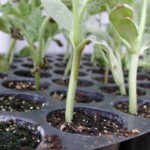
1. What caused the water-soaked stem of this watermelon transplant? A-damping-off B-gummy stem blight C-Lightening strike Correct Answer: B 2. Is this problem likely to spread to other transplants? Yes 3. Will this problem likely spread in the field? Yes More information about gummy stem blight can be found in the article Cantaloupe and Watermelon…Read more about Answer to Question from Last Issue (4-23-2020)[Read More]
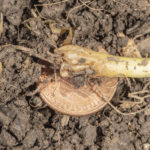
Each and every spring we get reports of poor seed emergence, seedling and transplant damage in early planted crops of all sorts. Most recently in untreated sweet corn, home gardens and transplanted onions. Lucky for us, we got to dive right into this pest and see them in action, but not so lucky for the…Read more about Seedling Damage by Maggot Pests[Read More]
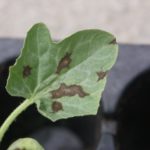
Many cantaloupe and watermelon growers are either growing transplants in a greenhouse or are expecting delivery of transplants in the next few weeks. Either way, growers should inspect transplants for disease before planting in the field. Below I will describe several common transplant diseases of cantaloupe and watermelon as well as management options. Gummy stem…Read more about Cantaloupe and Watermelon Transplant Diseases[Read More]