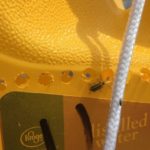
Have you ever wondered how striped cucumber beetles manage to find your cucurbits every year? Striped cucumber beetles rely on sight and smell to find food. They are particularly attracted to the color yellow and scents produced by cucurbit flowers and male striped cucumber beetles. This summer we studied how we could use lures that…Read more about DIY Traps for Striped Cucumber Beetle Management[Read More]
Cucurbits
On Friday, April 12, the FDA and CDC announced an outbreak of Salmonella Carrau in pre-cut melon products distributed by Indianapolis-based Caito Foods. While an Indiana company has been implicated in the outbreak, the melon product used to create the pre-cut products were not from Indiana and were likely imported from outside of the United…Read more about Salmonella Outbreak does not Involve Indiana-Grown Melons[Read More]

Two types of injury on young warm-season vegetable plants are caused by low temperatures: frost/freezing injury and chilling injury. Frost/freezing injury occurs when temperatures drop below 32°F. Ice formation in plant tissues cut cell membranes. When the tissue thaws, the damage results in fluids leaking from the cell, causing water soaked damage. Frost/freezing injury is…Read more about Protect Early Planted Warm-Season Vegetables from Low Temperatures[Read More]
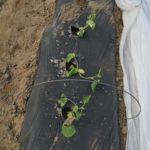
Chilling injury occurs when temperatures are above 32°F and below 55°F. The plant tissue becomes weakened that leads to cellular dysfunction. The most noticeable visual symptom of chilling injury is leaf and hypocotyl wilt (Figure 1). This is caused by the rapid decline in the ability of roots to absorb and transport water. It also…Read more about Chilling Injury on Young Warm-season Vegetable Plants[Read More]
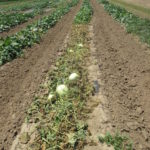
Bacterial wilt is a serious pest of cucumbers and melons. This disease is caused by the bacterium, Erwinia tracheiphila. However, it is spread by the striped or spotted cucumber beetle. Most management schemes have concentrated on controlling the cucumber beetle in order to lessen the severity of bacterial wilt. Currently, management of bacterial wilt often…Read more about Susceptibility of Melon Varieties to Bacterial Wilt[Read More]

Gowers always want to know which variety is the most suitable one for their farming location and market. I do understand the frustration of growers when looking online at all the varieties being sold by different vendors. There are a plethora of varieties available that have different fruit types and growth habits. Characteristics like potential…Read more about Yellow and Green Zucchini Varieties for the Local Market[Read More]
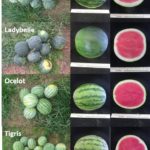
Watermelon variety trials are conducted every year at the Southwest Purdue Agricultural Center in Vincennes, IN. In the 2018 trials, it included 38 standard-size seedless watermelon cultivars and 10 personal-size watermelons. This article discussed the top yielding varieties in our trials in 2018. The full report of the variety trials, and information about the previous…Read more about Watermelon Cultivar Update from the 2018 Indiana Watermelon Variety Trial[Read More]
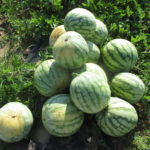
With the growing interest from consumers looking for new, unique products, yellow– and orange-flesh watermelons might create opportunities for small-sized growers to differentiate their products. This article answers a few questions you may have about growing and marketing these unique type of watermelons. Yellow and orange-flesh watermelons usually have narrow strips with varying degree of green…Read more about Yellow- and Orange-flesh Watermelons[Read More]

Tomato and Cucumber growers who are interested in grafting tomato and cucumber plants by themselves may find this information helpful. Step-By-Step instruction of how to graft tomato plants is available from Purdue Extension publication Vegetable Grafting: Techniques for Tomato Grafting https://mdc.itap.purdue.edu/item.asp?Item_Number=HO-260-W as well as a Purdue Extension video https://www.youtube.com/watch?v=7Ufx66Isf88 A cucumber grafting instruction was also…Read more about Learn How to Graft Cucumber and Tomato Plants[Read More]
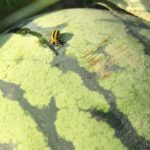
Striped cucumber beetle can be a significant pest in watermelon production systems. These pests can cause feeding damage to roots, stems, leaves, and flowers of plants as well as the watermelon fruit itself (Figure 1). In large enough densities, this damage can lead to economic loss. The economic threshold for striped cucumber beetles in watermelon…Read more about Striped Cucumber Beetles: Densities and Effective Scouting in Watermelons[Read More]