
The annual Purdue Small Farm Education Field Day will be presented on July 29th from 9 am – 12 pm at the Purdue Student Farm, West Lafayette. Watch this newsletter and Purdue Extension social media for more information, or contact Petrus Langenhoven at (765) 496-7955, plangenh@purdue.edu or Lori Jolly-Brown (765) 494-1296, ljollybr@purdue.edu.
The Pinney Purdue Vegetable Field Day/Twilight Meeting will be held August 9, 2022 at 11402 S. County Line Road, Wanatah, IN. The evening program will feature plot tours for farmers and for homeowners featuring topics of irrigation, sweet corn, pumpkins, soil health and cover crops. An afternoon session for farm advisors and educators will include…Read more about Pinney Purdue Vegetable Field Day August 9, 2022 – Save the Date![Read More]
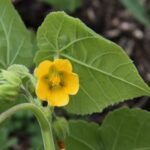
Velvetleaf (Abutilon theophrasti) – Mallow Family Synonyms: pie marker, buttonweed, Indian mallow, butter print, velvet weed, butter-weed, Indian hemp, cotton-weed, and wild cotton. Identification and General Description Summer annual that grows 3 to 8 feet tall. Heart-shaped leaves and stems are covered with short, soft hairs giving it a velvety feel. Young leaves and stems…Read more about Weed Spotlight[Read More]
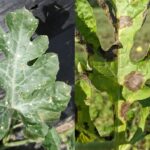
The following is a brief report of the pest and non-infectious problems found on vegetable in Indiana over the past 10 days. Tomato-In high tunnels and greenhouses, scattered growers have observed leaf mold, gray mold and white mold. Tomato spotted wilt has also been observed on tomatoes in high tunnels. Unfortunately, herbicide drift has also…Read more about Scouting Report[Read More]
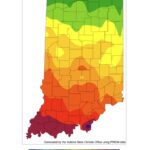
June 1st marked the beginning of meteorological summer (i.e., June, July, and August). Time between sunrise and sunset is still increasing, temperatures are increasing, and vegetation is growing. How did this past spring compare to climatology and what is expected over the next several months? Let us start with May’s climatology. May’s average temperature across…Read more about Meteorological Summer Begins[Read More]
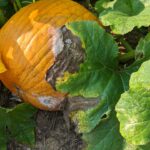
In the next month, many growers will start to plant pumpkins. This article will introduce aspects of disease management of pumpkins prior to the growing season. The information below is discussed under several of the most common diseases of pumpkins in Indiana. The objective of this article is to discuss what diseases are more likely…Read more about A Brief Primer on Disease Management of Pumpkin[Read More]
Topics of June strawberry chat are strawberry quality and marketing. Our guests will be Anya Osatuke and Adrienne Held. Anya is a berry specialist at Cornell Cooperative Extension. She will discuss her research and share insights on factors affecting strawberry quality. Adrienne is the owner of Holly Berry Farm in Santa Claus, IN. Adrienne will join…Read more about Strawberry Chat June[Read More]
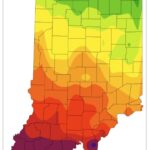
Indiana has been receiving less precipitation than normal, particularly over the last 30 days (Figure 1). In fact, southern Indiana has only received 25%-50% of the precipitation amounts it normally sees during this period. One would think this would mean “Abnormally Dry (D0)” if not “Moderate Drought (D1)” classifications for the U.S. Drought Monitor. However,…Read more about Too Dry or Too Wet?[Read More]
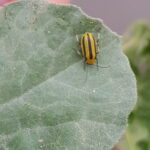
This time of year, when we are busy in the fields planting and prepping for a fruitful season, we need to be observant of the pest pressures that may be present. We have already had reports this year of cucumber beetles feeding on recently transplanted cucurbit crops, in particular melons and cucumbers. Let’s review why…Read more about Early Cucumber Beetle Management[Read More]
The annual Purdue Small Farm Education Field Day will be presented on July 29th from 9 am – 12 pm at the Purdue Student Farm, West Lafayette. Watch this newsletter and Purdue Extension social media for more information, or contact Petrus Langenhoven (765-496-7955, plangenh@purdue.edu) or Lori Jolly-Brown (765-494-1296, ljollybr@purdue.edu)
Purdue University prohibits discrimination against any member of the University community on the basis of race, religion, color, sex, age, national origin or ancestry, genetic information, marital status, parental status, sexual orientation, gender identity and expression, disability, or status as a veteran. This material may be available in alternative formats. 1-888-EXT-INFO Disclaimer: Reference to products in this publication is not intended to be an endorsement to the exclusion of others which may have similar uses. Any person using products listed in this publication assumes full responsibility for their use in accordance with current directions of the manufacturer.