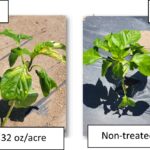
Command® 3ME herbicide recently received a 24C Special Local Need label for use in banana peppers in the state of Indiana (Figure 1). Prior to this registration, Command® 3ME could be applied in the production of other types of bell and non-bell peppers, but not banana peppers. Field research results by the Horticulture Crops Weed…Read more about Command 3ME Now Registered for Use in Banana Peppers in Indiana[Read More]
Solanaceous Crops
Background Tomato pinworm “TPW” (Keiferia lycopersicella) is a small microlepidopteran pest of solanaceous crops with a strong preference for tomato (Figure 1). It naturally occurs in warm climates of the U.S., including Texas, Florida, Hawaii, and California. It cannot survive outdoors in temperate climates, such as Indiana, where winter temperatures exceed a low threshold of…Read more about Presence of Tomato Pinworm on High Tunnel Tomato in Indiana[Read More]
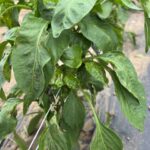
The first symptom of bacterial spot of pepper that is usually noticed is the lesions on the leaves. These lesions are irregular to round in shape and brown and are associated with chlorosis. Lesions are usually water-soaked (Figure 1). In severe cases, the fruit may be affected. The lesions on fruit are often raised (Figure…Read more about Bacterial Spot of Pepper[Read More]
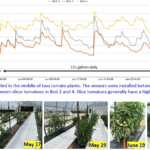
I often receive questions on how much water should apply to high tunnel tomatoes. Even the most experienced tomato growers could sometimes lose yield because of overlooking irrigation management. In this article, I describe a case study of how we use soil moisture sensors for irrigation management in a high tunnel tomato production system. This…Read more about A Case Study: Irrigation Management in High Tunnel Tomato Production[Read More]
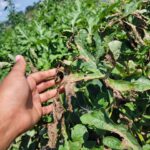
Earlier this year, Rely® 280 was registered for use in transplanted cantaloupe, cucumber, pepper, summer squash, tomato, and watermelon with a supplemental label. The registration allows for the use of Rely® 280 for pre-plant burndown and post-directed applications to row middles. Previously, postemergence burndown and row middle options were limited to glyphosate (Roundup®), carfentrazone (Aim®),…Read more about Rely® 280 Added to Row Middle Weed Control Arsenal in Select Crops[Read More]
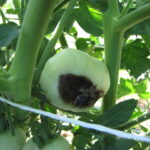
Tomatoes need a consistent water supply when they start to bloom and set fruit. As plants grow more foliage and have more fruits set, their water needs increase. As a result, the irrigation amount must steadily increase to maintain the consistent soil water content and the water supply to the plants. What would happen if…Read more about Tomatoes Need a Consistent Water Supply[Read More]
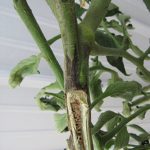
Tomato pith necrosis is a bacterial disease of tomatoes that occurs sporadically, usually in greenhouses or high tunnels. While this disease can kill or at least ruin marketable yield on tomatoes, the disease usually affects perhaps only a handful of plants in a greenhouse. That is, the disease does not seem to spread beyond the…Read more about Tomato pith necrosis[Read More]
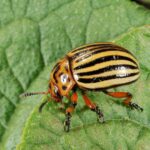
At the Purdue Student Farm, we are in full swing with our Colorado Potato Beetle (CPB; Figure 1) management program. On this small farm, these beetles are a consistent threat to the potato crop. This is in part due to their limited ability to rotate, as the whole farm is smaller than the recommended rotation…Read more about Are You Scouting Your Potatoes? The Beetles Are Here![Read More]

We are happy to announce that Purdue Extension is presenting its annual Fruit and Vegetable Field Day on July 20, 2023, at the Throckmorton/Meigs Horticulture Farm, Lafayette, IN. Registration is now open. To register your spot, visit https://cvent.me/5zevYD The field day schedule is very exciting, something for everyone to look forward to. Sweet corn pest…Read more about Purdue Fruit and Vegetable Field Day – Registration Now Open[Read More]
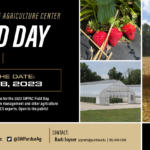
We are excited to announce that the Southwest Purdue Agricultural Center Field Day is scheduled for June 28, 2023, at the Southwest Purdue Agricultural Center (SWPAC), 4669 N. Purdue Rd. Vincennes, IN. Purdue researchers and NRCS representatives will present their current research and demonstration projects in fruit and vegetable production conducted at SWPAC. The topics…Read more about Southwest Purdue Agricultural Center Field Day _Registration Now Open![Read More]