At the Pinney Purdue Ag Center in northern Indiana we had plots in 2020 with no-till sweet corn, pumpkins and winter squash following a rye cover crop. As is common when adapting new planting and tillage systems, we had both challenges and successes. Check out the video presentations to see photos of the plots, and…Read more about No-till Sweet Corn, Pumpkin and Winter Squash after Winter Rye – Reports from 2020[Read More]
Cucurbits
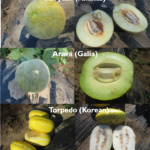
Melon is a crop with diverse fruit characteristics. They have different color, shape, rind pattern, texture, and flavor. In major food stores, cantaloupe and honeydew melons may be the only melon types sold, while the fantastic experience of melon consumption is far more than that. This created an opportunity for selling unique melon fruit at local farmers’ market and with a potentially higher price. It…Read more about Specialty Melon Evaluation in Southern Indiana[Read More]
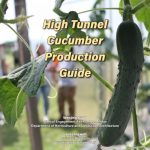
A new publication High Tunnel Cucumber Production Guide is available and can be downloaded at https://extension.entm.purdue.edu/publications/ID-521/ID-521-W.pdf This cucumber production guide provides resources and recommendations tailored to the distinctive growing environment of high tunnels. Recommendations are based on research efforts conducted in the Midwest U.S. and include cultivar selection, pruning and trellising systems, insect and mite…Read more about High Tunnel Cucumber Production Guide[Read More]

The Annual Fall/Winter Meeting of the Southwest Indiana Melon and Vegetable Growers is scheduled on Monday, November 30, 2020, 3:00 pm – 5:00 pm (EST). This meeting will be held online this year because of COVID-19 restrictions. Dr. Wenjing Guan and Dr. Dan Egel will discuss the results of the 2020 watermelon and cantaloupe variety…Read more about Southwest Indiana Melon and Vegetable Growers Winter Meeting[Read More]
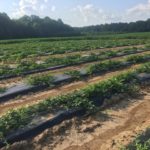
Thanks to growers’ collaboration and help from Superior Ag, we collected plant tissue samples from 12 watermelon fields at different crop growing stages in Southern Indiana in the 2020 season. In a previous article, we discussed results about magnesium and potassium. In this article, we will discuss another nutrient, Sulfur (S). Sulfur deficiency has become…Read more about Survey of Watermelon Nutritional Status in Southern Indiana – Sulfur[Read More]
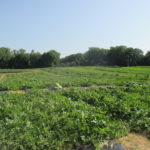
This article addresses considerations of using grafted watermelon plants in Indiana. Choosing rootstocks Interspecific hybrid squash is the most widely used watermelon rootstock. Many cultivars of the hybrid squash rootstocks that have been developed by different companies, share similar genetic background and thus similar characteristics. All of them have outstanding resistance to Fusarium wilt, but,…Read more about Using Grafted Watermelon Plants in Indiana[Read More]
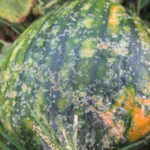
This time of year you are likely getting bogged down in the fight against pests. The accumulation of plant pathogens, insects, and climatic conditions favoring their growth can make the last few weeks of harvest feel like the toughest point in the battle. For cucurbit growers in particular, there are a number of insect pests…Read more about Cucumber Beetles Just Don’t Quit![Read More]
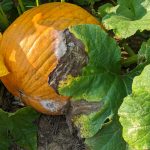
Phytophthora blight was a serious disease this past season. As a result, I have had many questions about managing this disease. The following article is an update of a previous article on this subject. The questions I have been asked have ranged from what do I spray to how does this disease work? Therefore, I…Read more about Phytophthora Blight of Cucurbits[Read More]
Thanks to growers’ collaboration and help from Superior Ag, we collected plant tissue samples from 12 watermelon fields at different crop growing stages in Southern Indiana in the 2020 season. In this article, I want to discuss two of the issues that standout from these tests. One is the generally low or deficient Magnesium (Mg)…Read more about Survey of Watermelon Nutritional Status in Southern Indiana — Magnesium and Potassium[Read More]
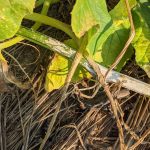
This disease appears to be more important each year. It is not clear to me why. This article reviews Plectosporium of pumpkin, sometimes called white speck. I would rank Plectosporium blight behind powdery mildew, bacterial leaf spot and Phytophthora blight in economic damage caused. The occurrence of this disease is usually sporadic. However, when it…Read more about Plectosporium blight of Pumpkin[Read More]