Are you still thinking about varieties for the upcoming season? Purdue has been keeping a record of vegetable variety trials in the Midwest since 1999. The Midwest Vegetable Trial Report series includes reports of applied research relevant to vegetable and melon production in the Midwest. Here are some abstracts of the most recent reports. Visit the Midwest Vegetable…Read more about Selecting Vegetable Varieties for Your Farm[Read More]
Production Management
The 2023 dry edible bean harvest wrapped up in mid-September. This season was unique from a weather standpoint – dry in June and wet in July, rather than the other way around. How did this affect the trial? Dry beans are a short-season crop, especially compared to many of the field crops we are used…Read more about Rain on the Scarecrow, Weeds in the Beans[Read More]
Steve Reiners, Professor in Horticulture, Cornell University, Cornell AgriTech Canadian wildfires are impacting air quality here in the Northeast. Smoke has filled the sky, and warnings have been issued for outdoor activities. This is making many growers and gardeners worried about the potential impact the smoke will have on field-grown vegetables. The good news is the…Read more about Smoke Not a Problem for Vegetables[Read More]
The harvest season may not have ended yet; it is time to plan for the new planting. This article summarizes options for planting materials and considerations for plasticulture-grown strawberries in the region. Purchasing plug plants Plug plants are like vegetable transplants with actively growing root systems. Plug plants are much easier to establish than bare-root…Read more about Plug? Bare-root? What Other Options for Plasticulture Strawberry Planting? [Read More]

A diversified farm plans its crop rotation around producing various perishable products that sell well, like tomatoes, peppers, and leafy greens. As the farm builds market opportunities, it might consider adding new or unusual crops to the crop plan. Storage crops can be part of that plan, extending the sale season for growers and additional…Read more about A Large Grain for the Small Farm?[Read More]
Are you still thinking about varieties for the upcoming season? Purdue has been keeping a record of vegetable variety trials in the Midwest since 1999. The Midwest Vegetable Trial Report series includes reports of applied research relevant to vegetable and melon production in the Midwest. Here are some abstracts of the most recent reports. Visit…Read more about Selecting Vegetable Varieties for your Farm[Read More]

Registration is open for the 2023 Indiana Small Farm Conference! Join us for the event at the Hendricks County 4-H Fairgrounds and Conference Center in Danville. Gain practical, hands-on guidance from leaders and experts at the 2023 Indiana Small Farm Conference. This 11th annual event takes place in Danville on March 2-3. If you haven’t…Read more about Indiana Small Farms Conference, March 2-3[Read More]

We observed a large amount of unmarketable pepper fruit hanging on the plants during on-farm visits and at the research farms recently. Damage appears on the sides or at the bottom of the fruit (Figure 1). The symptoms that occur at the fruit bottom are similar to tomato blossom end rot (BER), a plant physiological…Read more about Unmarketable Bell Peppers[Read More]
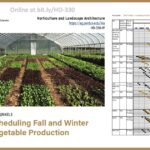
A new bulletin “Scheduling Fall and Winter Vegetable Production in High Tunnels” is available from the Purdue Education store at https://edustore.purdue.edu/item.asp?Item_Number=HO-330-W . The publication brings together information collected on farms and research stations in Indiana and Ohio to provide detailed guidance on scheduling vegetable crops for winter high tunnel production. It includes a fillable scheduling…Read more about Scheduling Fall and Winter Vegetable Production in High Tunnels[Read More]
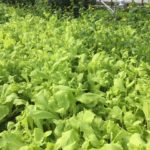
Bolting of crops overwintered in high tunnels is common in the spring. ‘Bolting’ refers to lengthening and blooming of the flowering stalk. Bolting is often a problem because the quality of the marketable part of the plant declines. Also, plants subject to bolting are programmed to die once they complete flowering and seed production so…Read more about Bolting and Blooming in High Tunnels[Read More]