It is not unusual for watermelon wilt to occur in the late season in our region. The plants are loaded with fruit and are sensitive to many stresses. In some cases, it is clear pathogens cause the problem, such as late-season fusarium wilt. While in other cases, it is hard to associate the symptom with…Read more about Improving Watermelon Cultural Practices, Are We on the Right Track?[Read More]
Cucurbits
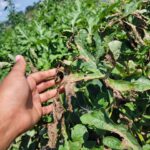
Earlier this year, Rely® 280 was registered for use in transplanted cantaloupe, cucumber, pepper, summer squash, tomato, and watermelon with a supplemental label. The registration allows for the use of Rely® 280 for pre-plant burndown and post-directed applications to row middles. Previously, postemergence burndown and row middle options were limited to glyphosate (Roundup®), carfentrazone (Aim®),…Read more about Rely® 280 Added to Row Middle Weed Control Arsenal in Select Crops[Read More]
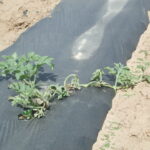
Fusarium wilt of watermelon is one of the most economically important diseases of watermelon in the Midwest. Fusarium wilt typically shows up in watermelon fields just after Memorial Day. This year is no different. After a brief description of the symptoms of the disease, this article will discuss the pluses and minuses of possible fungicide…Read more about Fungicides for Fusarium wilt of Watermelon after Symptoms?[Read More]
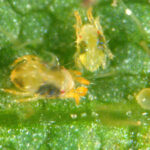
Are you interested in collaborating with Purdue Entomology on the grant “Improving two-spotted spider mite management in high tunnel cucumber production” funded by North Central SARE, Sustainable Agriculture Research and Education (LNC20-438)? The primary objectives of this research are to increase our understanding of two-spotted spider mite dynamics and management in a high tunnel cucumber…Read more about Looking for Collaborators on High Tunnel Spider Mite Project[Read More]

In watermelon systems in Indiana, cover crops are extensively used with the primary function of acting as a wind-break to protect the seedlings when they are planted in May. Due to the nature of the landscape and the soil type (e.g., open areas with sandy soils), seedlings are exposed to physical damage caused by sandblasting….Read more about Enhancing Insect Pest and Pollinator Management with Flowering Cover Crops[Read More]
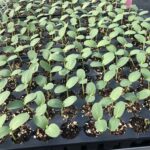
Most of us know a temperature lower than 32°F would kill tender vegetables like tomatoes, peppers, melons, and cucumbers. Home gardeners would wait to plant those crops after the last frost passed, but commercial farmers may take the risk of planting earlier to capture early-season premium prices. Farmers use various strategies, i.e., high tunnels, low…Read more about Check Soil Temperatures Before Planting Cold Sensitive Crops[Read More]

This article was originally written by Dan Egel, who retired from Purdue. Please contact the PPDL for more information. MELCAST is a weather-based disease-forecasting program that helps growers schedule foliar fungicide applications for cantaloupe and watermelon. MELCAST stands for MELon disease for CASTer. This program, designed by Dr. Rick Latin, Professor Emeritus of Plant Pathology at…Read more about Melon Disease Forecaster 2024[Read More]

We are happy to announce that Purdue Extension is presenting its annual Fruit and Vegetable Field Day on July 20, 2023, at the Throckmorton/Meigs Horticulture Farm, Lafayette, IN. Registration is now open. To register your spot, visit https://cvent.me/5zevYD The field day schedule is very exciting, something for everyone to look forward to. Sweet corn pest…Read more about Purdue Fruit and Vegetable Field Day – Registration Now Open[Read More]

We are excited to announce that the Southwest Purdue Agricultural Center Field Day is scheduled for June 28, 2023, at the Southwest Purdue Agricultural Center (SWPAC), 4669 N. Purdue Rd. Vincennes, IN. Purdue researchers and NRCS representatives will present their current research and demonstration projects in fruit and vegetable production conducted at SWPAC. The topics…Read more about Southwest Purdue Agricultural Center Field Day _Registration Now Open![Read More]
The warm weather of late did not only pull us out of our winter slumber but definitely awoke some of our overwintering pests as well. Cucumber beetles and seedcorn maggots are likely on the hunt for food, and your early-season crops may be exactly what they are looking for. Striped cucumber beetles (Figure 1) are…Read more about Threats to Early Seedlings[Read More]