
Vegetable Educational Meeting for Vegetable and Pumpkin Farmers February 18th from 8:30 am-11:30 am Purdue Extension, Lake County Office, 2291 North Main St., Crown Point, IN. Agenda • Did you know hot water treatment can help protect your seeds from diseases? • Come meet the new vegetable pathologist, Dr. Cesar Escalante! • Midwest Vegetable Production…Read more about Purdue Extension-Lake County Hosts Educational Meeting for Vegetable and Pumpkin Farmers[Read More]
Cucurbits

Southern Indiana Vegetable Growers Annual Meeting will be held in conjunction with Illiana Watermelon Association Convention (IWA). The meeting will take place on January 17th in French Lick, Indiana. The meeting agenda is posted below. Additional details about the event can be found on the IWA website. Registration and booth questions should be directed to…Read more about Southern Indiana Vegetable Growers & Illiana Watermelon Accociation Winter Meeting[Read More]
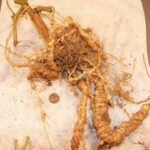
Root-knot nematode (RKN, Meloidogyne spp.) is a major problem in cucurbits such as watermelon, cantaloupe, cucumber, pumpkin, and squash. The reason RKN is problematic lies in their ability to persist for long periods in the soil and their wide host range, which includes more than 2,000 plant species, including crops and weeds. RKN infestations are…Read more about Battling Root-knot Nematodes In Commercial Cucurbit Crops[Read More]
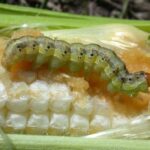
Squash Vine Borer While we have disseminated several Delta traps throughout the state, we are getting few reports back from collaborators. Those who have reported recently (Allen, Marion, and Knox Counties) are all still reporting adult moths being active and caught in traps. Corn Earworm Be sure that you are monitoring your dent corn in…Read more about Insect Trapping Updates Jul-23, 2024[Read More]
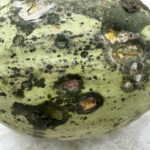
Bacterial fruit blotch (BFB) is a disease caused by the pathogen Acidovorax avenae subsp. citrulli. Most cucurbit crops are affected by this disease, although watermelon cultivars are commonly more susceptible. However, this summer, I received cantaloupe samples (Figures 1 and 2) that tested positive for BFB using serological tests. When environmental conditions are conducive,…Read more about Bacterial Fruit Blotch On Cucurbits[Read More]

Dear Melon Growers and Industry Friends, You are invited to tour the watermelon variety trials conducted at Southwest Purdue Ag Center in Vincennes, IN, on July 24, 10:00 am-1:00 pm EST. The variety trials include: A standard-sized seedless watermelon trial A person-sized seedless watermelon trial A seeded watermelon trial This is a self-guided tour. Extension…Read more about Southwest Purdue Ag Center Watermelon Variety Evaluation Open House on July 24[Read More]
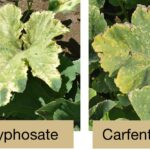
Across the state, pumpkin plantings are hitting their stride with varying degrees of success. The grower phone calls I’ve received lately revolve around options for managing emerged weeds. Broadcast options are limited to grass-selective herbicides such as sethoxydim, clethodim, and halosulfuron (Sandea®) for small broadleaf weeds and sedge suppression. All of these products can result…Read more about Post-Directed Herbicide Applications in Pumpkin[Read More]
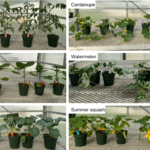
This week, several regions of Indiana experienced excessive rainfall due to the remnants of Hurricane Beryl passing through the state. The heavy rain caused flooding in some vegetable fields. When soil water levels surpass optimal requirements, oxygen is depleted, leading to waterlogging stress for the plants. Figure 1 displays the varied responses of different crops…Read more about Vegetable Responses to Waterlogging Stress[Read More]
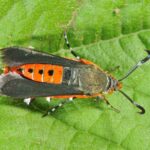
I monitor three different insect pests with pheromone traps to help make informed decisions about when to spray insecticides or take other actions for management. Trap data can be found on the Extension Entomology Vegetables Website. The longest-running is the corn earworm (Figure 1) trapping network. Purdue Meigs farm, in Tippecanoe County, is still catching…Read more about Insect Monitoring Updates[Read More]
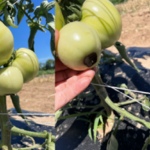
It seems the season has shifted abruptly from wet to dry. Over the past week, we’ve begun to hear reports typically associated with hot and dry conditions. At the Southwest Purdue Agricultural Center, we conduct side-by-side comparisons of different fruiting vegetables under varying irrigation treatments. This article summarizes our observations on how different fruiting vegetable…Read more about Fruiting Vegetable Responses to Drought Stress[Read More]